


Caring for our Habitats
We've developed partnerships within Argyll and further afield to protect our unique environment and help tackle non-native and invasive species.

Habitats and Invasive Non-Native Species
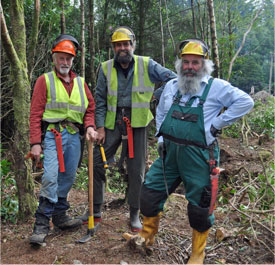
Taking care of our unique environment
Introduction
We are meeting our objective ‘to enhance and protect the environment’ through projects which will reduce the invasive non-native species of rhododendron ponticum in Argyll and aid the restoration of forest and peatland ecosystems.
Invasive non-native species (INNS) such as Rhododendron ponticum, American Mink, Japanese Knotweed and Himalayan Balsam are widespread across Argyll and pay no respect to boundaries or landownerships. We are working with communities, agencies, landowners and potential funders to develop the co-ordinated activity required to really make a difference.
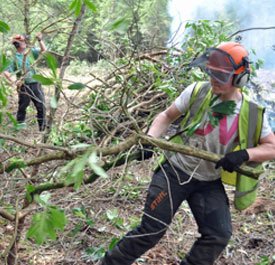
Community Rhododendron Management Event – May 2014
Contractors, forest managers, landowners and land managers from across Argyll attended an event at Glen Creran Estate to find out how best to fight off invasive aliens!
Bruce Marshall, Trustee of ACT, who chaired the event said: “Rhododendron ponticum is really nasty stuff – it spreads very quickly suffocates habitats, hampers biodiversity and – if that wasn’t bad enough – it harbours tree-killing phytophthora species. Over a few years it will devastate the ecosystem in any woodland where it takes hold.
“Argyll is one of the Scottish hotspots for this plant and tackling it is important for the area’s habitats, its wildlife – and for improving the landscape for visitors and local people. Because such a large area of Argyll is affected, planning and co-ordinating eradication and control action at the scale it needs to happen requires a group effort. “Each site is different and has its own challenges so it was great to see such a good turn-out on the day. One of the key objectives for ACT is to share ideas on how to care for, enhance and enjoy our environment and this event very clearly explained the why and how of effective rhododendron eradication.”
As well as promoting involvement in ACT activities, the event looked at successes and lessons to be learned from other rhododendron control projects and included demonstrations of conventional and alternative control techniques. Elaine Jamieson, Policy, Support & Development Officer with Forestry Commission Scotland’s West Argyll team, said: “In 2011 the Commission launched a programme of action to remove rhododendron from the national forest estate completely – but the scale of the task is so immense that we set aside 15 years to do it!” “
We’ve put some of our experience to good use and have been gathering information on Glen Creran’s rhododendron population and how we might pull together a collaborative control funding bid. Having a partnership like ACT focus on this issue is great for Argyll and will have a huge environmental, social and potentially economic benefit.”
We hope to conclude Rhododendron ponticum clearance work at Glen Creran started by SNH and FCS. A funding application for the final works required is currently being finalised.
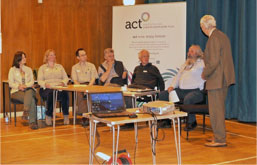
CANN - Collaborative Action for Natura Network
ACT is one of 11 Scottish and Irish partners forming the CANN consortium which has submitted a £9M application for European Funding to protect and restore biodiversity, and the recovery of selected protected habitats and priority species. If successful, the project will bring around £950K to Argyll through employment opportunities delivering a programme of peatland restoration for Islay, and supporting education and outreach activities over a 5 year period.
CANN is an ambitious and high profile project in which ACT playing a key part. We are working closely with SNH and Argyll and Bute Council who have expertise in European funded project delivery. We will know if the bid has been successful in September 2016.
We are also looking at opportunities to tackle INNS through other European programmes, including the Northern Periphery funding stream which will open for bids in April 2016.
Campaigns
Our summer campaigns – Act Alfresco, Your Act and Perfect Picnic have also delivered small scale improvements which benefit our habitats and support biodiversity, including species surveying, provision of bat boxes, tree planting and community litter picks.
